Topics in this domain
- Project Roles and Governance
- PMBOK Phases
- Gantt, PERT, Critical Path
- Function Point Analysis
- Earned Value and Project Risk
- Business Case and Feasibility
- Benefits Realization
- SDLC Phases Overview
- Requirements Definition
- System Design
- Waterfall vs. Iterative vs. Prototyping
- Agile
- DevOps and DevSecOps
- RAD, CASE, Low-Code
- Build, Coding Standards, Code Review
- Testing Levels: Unit, Integration, System, UAT
- Regression, Sociability, Parallel, Pilot Testing
- Defect Management
- Data Migration and Conversion
- Change-Over: Parallel, Phased, Abrupt
- Go-Live Readiness and Acceptance
- Post-Implementation Review
- Input Controls
- Processing Controls
- Output Controls
- Data Integrity and ACID
- EDI and E-Commerce Controls
PMBOK Phases
The shape of every project
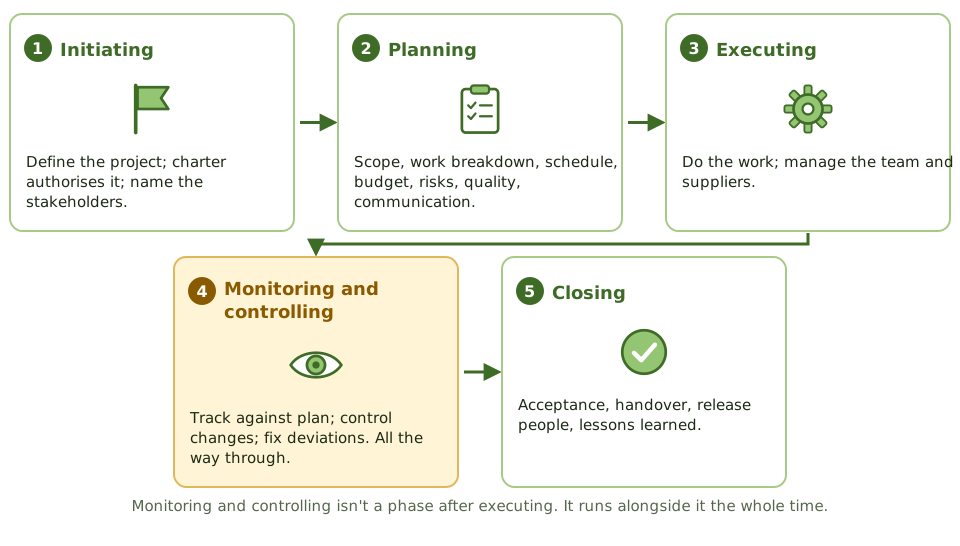
Whether it’s building a house, organising a wedding or replacing a payroll system, every project follows the same pattern: decide to do it, plan it, do it while keeping an eye on it, and wrap it up. The PMI’s Project Management Body of Knowledge (PMBOK) calls these the five process groups.
| Process group | Key activities and outputs |
|---|---|
| Initiating | Define the project at a high level; the project charter authorises it; identify stakeholders |
| Planning | Scope statement, work breakdown structure (WBS), schedule, budget, quality, resource, communication, risk and procurement plans |
| Executing | Do the work; manage the team, quality, communication and suppliers |
| Monitoring and controlling | Track performance against the plan; control changes; correct problems |
| Closing | Formal acceptance; close contracts; release resources; lessons learned; archive records |
Monitoring and controlling isn’t a phase that comes after execution. It runs throughout.
The triple constraint
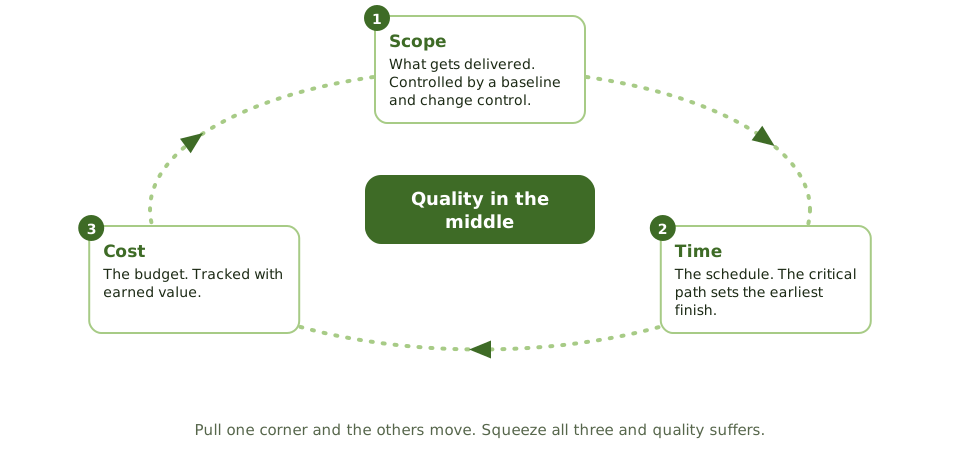
Every project balances scope, time and cost, with quality affected by all three. Pull one corner and the others move.
A wedding planner told to add 50 guests (scope) with the same budget (cost) and the same date (time) has only one thing left to give: quality. Cheaper food, a smaller venue, fewer flowers.
That’s why changes to any of the three go through change control, so their effect on the others is understood and approved.
Planning tools
- Work breakdown structure (WBS): breaks the project’s deliverables into work packages small enough to estimate, assign and track. It’s about what gets delivered, not when.
- Scheduling: Gantt charts, PERT and the critical path (covered next).
- Estimating: function point analysis and similar techniques.
- Cost control: earned value management.
PRINCE2
PRINCE2 is a process-based method popular in the UK and Europe. Its principles include continued business justification, learning from experience, defined roles, management by stages, management by exception, focus on products, and tailoring. Exam questions mostly use general terms, but “management by stages” maps to stage gates and “continued business justification” maps to revisiting the business case.
What the auditor checks
- Is there a charter and an approved business case?
- Are scope, schedule and budget baselined and controlled?
- Is progress reported honestly against the baselines?
- Are risks identified, owned and managed?
- Do changes go through change control?
- Was the project formally closed, with acceptance and lessons learned?
Example. A project shows “green” status every month, but the auditor finds the baseline schedule was quietly reset three times without steering committee approval. The reported status hid a nine-month delay.
How the exam asks about it
| If the question asks… | The answer is usually… |
|---|---|
| The document that formally authorises a project | The project charter |
| The tool that breaks deliverables into work packages | The work breakdown structure |
| Cause of scope creep | Changes accepted without formal change control |
| The final project activity | Formal closure, including lessons learned |
| When monitoring and controlling happens | Throughout the project |
In short
- PMBOK groups project management into initiating, planning, executing, monitoring and controlling, and closing.
- Monitoring and controlling runs alongside execution throughout the project, not after it.
- The triple constraint is scope, time and cost; changing one affects the others, and quality.
- Key planning outputs: the project charter, scope statement, work breakdown structure, schedule, budget, risk and communication plans.
- Proper closure includes formal acceptance, releasing resources, and a lessons-learned review.
- PRINCE2 is an alternative method built on business justification, defined roles and management by stages.
Exam traps
- The project charter formally authorises the project and names the project manager; it's an initiating output.
- A work breakdown structure breaks down deliverables; it isn't a timeline.
- Scope creep happens when changes skip change control.
- A project isn't properly closed without formal acceptance and lessons learned.
Slides
Click the slide and use the arrow keys. F toggles full screen.
The shape of every project
Whether you're building a house, organising a wedding or replacing a payroll system, projects follow the same pattern: decide to do it, plan it, do it while keeping an eye on it, and wrap it up.
The PMBOK (Project Management Body of Knowledge) calls these the five process groups.
The triple constraint