Topics in this domain
- Project Roles and Governance
- PMBOK Phases
- Gantt, PERT, Critical Path
- Function Point Analysis
- Earned Value and Project Risk
- Business Case and Feasibility
- Benefits Realization
- SDLC Phases Overview
- Requirements Definition
- System Design
- Waterfall vs. Iterative vs. Prototyping
- Agile
- DevOps and DevSecOps
- RAD, CASE, Low-Code
- Build, Coding Standards, Code Review
- Testing Levels: Unit, Integration, System, UAT
- Regression, Sociability, Parallel, Pilot Testing
- Defect Management
- Data Migration and Conversion
- Change-Over: Parallel, Phased, Abrupt
- Go-Live Readiness and Acceptance
- Post-Implementation Review
- Input Controls
- Processing Controls
- Output Controls
- Data Integrity and ACID
- EDI and E-Commerce Controls
SDLC Phases Overview
The life of a system
Building a system is like building a house. You decide whether it’s worth it, agree what rooms you need, draw the plans, build it, have it inspected, move in, and later check it’s what you wanted. Change your mind about where the kitchen goes while drawing the plans and it costs an eraser; change it after the walls are up and it costs a fortune.
The system development life cycle (SDLC) is that same sequence for software.
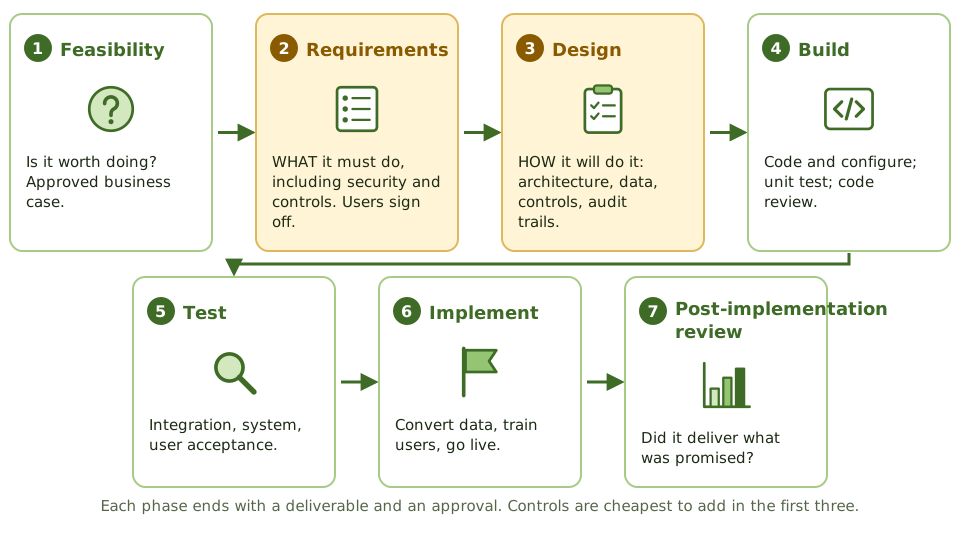
| Phase | Purpose | Key outputs and controls |
|---|---|---|
| Feasibility | Is it worth doing, and possible? | Business case, feasibility analysis, approval to go ahead |
| Requirements | What must the system do? | Functional and non-functional requirements, including security, control, audit trail and compliance needs; user sign-off |
| Design | How will it do it? | Architecture, data design, interfaces, controls design; design review |
| Build | Make it | Code to standards, peer review, unit testing, version control |
| Test | Does it work, and meet requirements? | Integration, system, security, performance and user acceptance testing; sign-off |
| Implement | Put it into use | Data conversion and reconciliation, training, cutover plan, go-live approval, rollback plan |
| Post-implementation review | Did it deliver? | Comparison with objectives and benefits; lessons learned |
When software is bought rather than built, the path looks slightly different: requirements → request for proposal → vendor evaluation → contract → configuration → testing.
Build controls in early
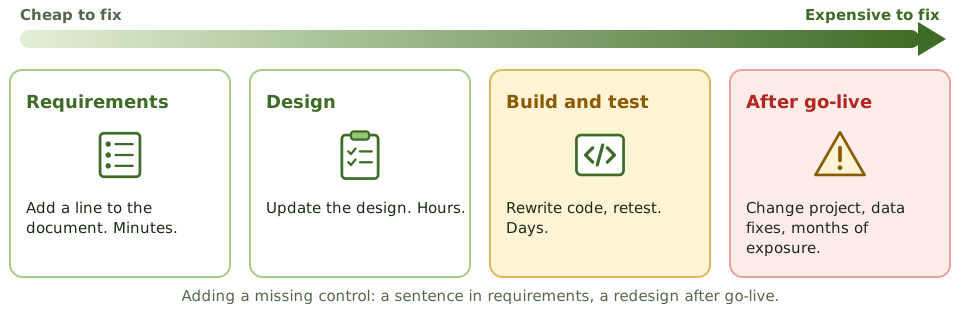
Fixing a problem gets more expensive the later it’s found. A missing audit trail spotted in requirements is a line in a document. Spotted after go-live, it may mean redesigning database tables and interfaces. So:
- control, security and audit requirements belong in the requirements phase
- design reviews check those controls are specified before coding
- the auditor’s involvement is most cost-effective early
Example. In a payments project, the auditor reviews the requirements and notices there’s no requirement for two people to approve large payments. Adding it now costs a few days of design. Found after go-live, it would need a change project and leave months of exposure.
Users throughout
Users define the requirements, take part in design reviews, do the acceptance testing, and formally accept the system. Weak user involvement is one of the most common reasons projects fail.
The auditor at each phase
- Requirements: are control and security needs included and approved?
- Design: are audit trails, input and processing controls, and access roles designed in?
- Build and test: are standards followed, and is testing adequate?
- Implementation: is data conversion controlled, and is go-live properly approved?
- Post-implementation: were the objectives met?
The auditor advises and reviews; they don’t approve deliverables.
How the exam asks about it
| If the question asks… | The answer is usually… |
|---|---|
| The most cost-effective phase to build in controls | Requirements definition / design |
| The phase where user involvement matters most | Requirements (and acceptance testing) |
| Risk if users don’t approve the requirements | The system won’t meet business needs |
| The phase that confirms benefits were achieved | Post-implementation review |
| Best time for the auditor to get involved | Early, from requirements onward |
In short
- A typical SDLC: feasibility, requirements, design, build, test, implement, and post-implementation review.
- Controls and security should be built in from the requirements phase, because adding them later costs far more.
- In traditional models each phase ends with a deliverable and an approval before the next starts.
- User involvement matters most in requirements and acceptance testing.
- The auditor reviews controls at each phase; getting involved early is most cost-effective.
- Errors found in requirements cost far less to fix than errors found after go-live.
Exam traps
- The cheapest time to build in controls and audit trails is the requirements and design phases.
- Requirements without user sign-off are a major project risk.
- Testing doesn't create quality; it confirms quality that was designed in.
- The post-implementation review is part of the SDLC, not optional.
Slides
Click the slide and use the arrow keys. F toggles full screen.
The life of a system
Building a system is like building a house: you decide if it's worth it, agree what rooms you need, draw the plans, build, inspect, move in, and later check it's what you wanted.
The system development life cycle (SDLC) is that same sequence for software.
Why early is cheaper